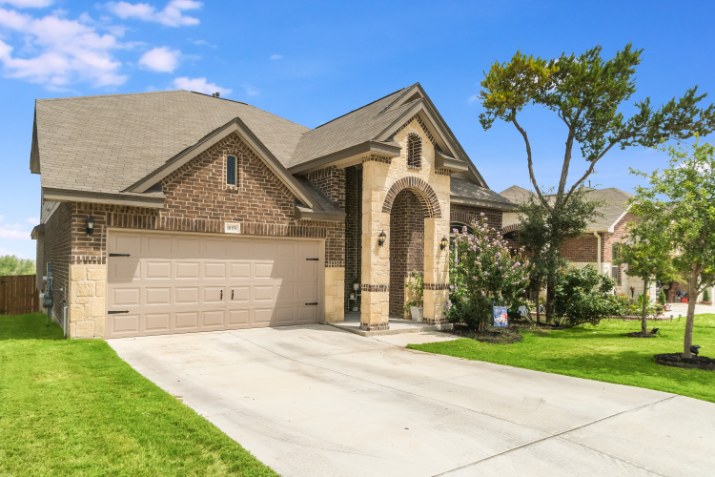
In Rosehaven Homes Limited v. Jamil, 2026 ONCA 446, a buyer failed to close a new-build purchase because he did not have the money. The seller resold and sued for the shortfall. The trial judge awarded a modest amount, but the Court of Appeal nearly doubled it. The decision is short, and its message is direct. When a buyer defaults and the seller resells at arm’s length, the difference between the two prices is the measure of damages, and expert evidence is generally unnecessary.
The Settled Rule
The Court of Appeal restated the framework from Arista Homes v. Rahnama. Where a purchaser fails to close and the vendor takes reasonable steps to sell the property in an arm’s-length sale to a third party in mitigation, and there is nothing improvident about that sale, the difference between the two sale prices measures the damages. In those circumstances, no expert evidence is required. The court pointed to its earlier authorities and to the Divisional Court’s decision in Marshall v. Hall as consistent statements of the same principle.
This is the loss of bargain measure. It compensates the seller for the benefit lost when the buyer’s breach forced a resale at a lower price. The elegance of the rule is that the market itself, through a genuine arm’s-length resale, supplies the number.
Where the Trial Judge Went Wrong
The trial judge did not apply that approach and awarded less than the price differential supported. The Court of Appeal held this was an error. Expert evidence has a role, but it belongs to the defaulting buyer. A buyer may call an expert to show that the seller failed to take reasonable steps to resell, or that the resale was improvident. Absent that evidence, the arm’s-length resale price stands as the basis for the calculation.
Here the buyer produced no expert evidence that the resale process was unreasonable, and the appraisal material did not establish that the resale price was improvident. There was no evidence that the seller’s mitigation efforts fell short. With the record in that state, the differential governed.
The Numbers
The appeal was allowed and the judgment amended. The damages award rose from $36,053.02 to $69,761.09, an increase of $33,708.07. Pre-judgment interest was recalculated at 12 percent per annum, rising from $22,639.32 to $43,806.14. Because the buyer had already paid the judgment under appeal, he was left responsible for the outstanding balance of $54,874.89 plus fixed costs of $8,000.
Why Transactional Lawyers Should Care
Deals collapse, and when they do, the seller’s remedy is often a resale. This decision reinforces how predictable the damages exposure is. A buyer who breaches for lack of financing faces a clear and calculable liability equal to the price gap, plus interest that can be substantial over a long litigation timeline.
Document the resale. The rule depends on an arm’s-length sale with nothing improvident about it. A seller who keeps clean records of a genuine marketing and sale process protects the differential from attack.
The burden sits with the buyer. If a buyer wants to argue the resale was mishandled or the price too low, the buyer must bring evidence, usually expert evidence. Silence on that front leaves the resale price intact.
Interest compounds the exposure. At 12 percent per annum over several years, pre-judgment interest can rival the principal. That reality is worth conveying to clients weighing whether to walk from a purchase.
Advise buyers early on financing. The simplest way to avoid this outcome is to confirm that the money will be there on closing. A failed close for lack of funds is expensive and, on this law, hard to defend.
