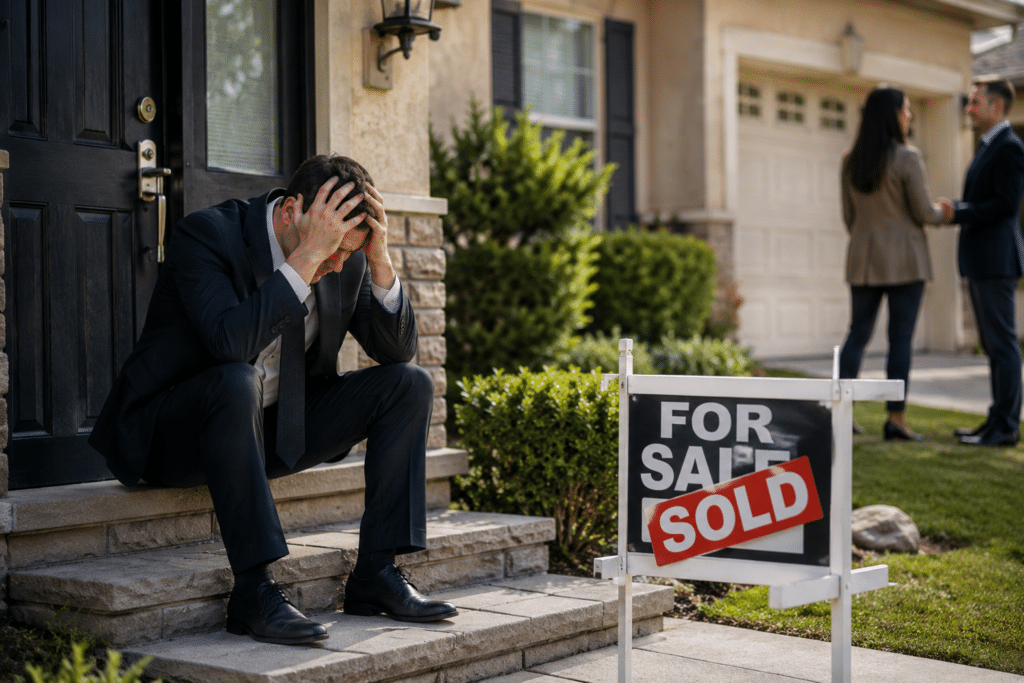
When a seller refuses to close in Ontario, a buyer can feel powerless after months of planning and a firm deal in hand. The law, however, does not leave you stranded. A signed Agreement of Purchase and Sale binds the seller just as tightly as the buyer, and a seller who refuses to accept your money usually faces real consequences. You may be able to force the sale, recover damages, or both. This guide explains your remedies in plain language so you can decide what to do next.
What It Means When a Seller Refuses to Close
In Ontario, “closing” is the day title and money change hands. A seller refuses to close when they fail to complete the sale on the agreed date, even with a buyer ready, willing, and able to pay. Lawyers call this repudiation, or a breach of the agreement.
Some sellers get cold feet once prices rise and regret sets in. Others point to an alleged problem with the deposit, the financing, or the paperwork. In practice, the label rarely changes much. A binding agreement does not let a seller cancel just to chase a better offer.
You do, however, have to show that you held up your own end. That means proving you were ready to close with the funds in place. Confirm that you met every obligation under the agreement before you act. A buyer who performed cleanly usually holds a strong position.
Common Reasons Sellers Try to Back Out
The seller’s motive helps you predict their defence. A rising market is the most common trigger, since the seller suddenly believes the property is worth more than your price. Notably, regret, on its own, is not a legal defence.
Other sellers raise a technical issue, such as a late payment or a missing condition. Some of these arguments have merit, but many do not. A lawyer can review whether the excuse actually holds up.
A co-owner, spouse, or estate sometimes complicates the seller’s ability to convey clear title. These problems can delay or derail a closing, so they deserve early attention. They may also point you toward one remedy over another.
Can You Force the Seller to Complete the Sale?
Many buyers ask whether a court can simply order the seller to go through with the deal. That remedy, called specific performance, directs the seller to transfer the property rather than pay money. In fact, courts grant it only in limited circumstances.
The leading case is Semelhago v. Paramadevan, 1996 CanLII 209 (SCC), where the Supreme Court of Canada held that land is no longer automatically treated as unique. You now have to show that the specific property is unique, meaning no substitute is readily available. An ordinary subdivision home may not qualify, while a one-of-a-kind property often will. Specific performance should not be granted as a matter of course absent evidence that the property is unique to the extent that a substitute would not be readily available.
The Three-Part Test for Specific Performance
Ontario courts weigh three main factors before ordering specific performance. The first is the nature of the property and whether it is truly unique. The second asks whether damages would adequately compensate you. The third examines the conduct of both parties, since this remedy rests on fairness.
The fundamental question remains simple. The court asks whether the land, rather than its cash equivalent, better serves justice between the parties. Your evidence should therefore focus on the home’s location, features, and your intended use.
Unique Homes Versus Replaceable Properties
Even so, not every property meets the test. A standard condominium unit in a large building may have many close substitutes, which can steer a court toward damages. A custom home, a rural acreage, or a property with rare features stands a far better chance. The uniqueness need not apply only to the property itself, but can include important amenities that are in its neighborhood.
Timing counts as well, so you must keep acting like a committed buyer. Stay ready to close, avoid long delays, and document your continued willingness to complete the purchase. Raising specific performance early also helps, because a court looks closely at how you behaved after the breach.
Suing for Damages When a Seller Refuses to Close
If you no longer want the property, or a court will not order the sale, you can sue for damages instead. Damages aim to put you in the position you would have occupied had the seller honoured the deal. Ultimately, the goal is full financial compensation, not punishment.
The most common measure is the extra cost of buying a comparable home. Say the seller refuses to close and you must pay more for a similar property, that gap forms the heart of your claim. You may also recover related expenses, such as inspection fees, legal costs, and temporary accommodation caused by the delay.
You carry a duty to act reasonably after the breach. The law expects you to limit your losses, so you should look for a suitable replacement home within a reasonable time. A prompt, sensible search both reduces your damages and supports your credibility in court.
How Courts Measure Your Damages
Ontario courts generally assess damages as of the date of breach. In Akelius Canada Ltd. v. 2436196 Ontario Inc., 2022 ONCA 259, the Court of Appeal confirmed that the relevant date is when the seller breached, and that an innocent buyer cannot claim the profit the seller later earned on a resale. The court compares your contract price to the property’s market value on the closing date.
Strong evidence drives the result. A professional appraisal helps fix what the home was worth on the breach date. Records of the comparable property you eventually bought back up your claim, so careful documentation protects every dollar you seek.
A Worked Example: Calculating Your Loss
A simple example shows how the numbers work. Say you agreed to buy a home for $800,000, the seller refused to close as the market climbed, and you then bought a comparable home nearby for $880,000.
As a result, your core loss is the $80,000 difference. On top of that, you can add the costs the breach forced on you, such as a second set of legal fees, a new inspection, and a few weeks of temporary housing. The total claim often climbs above the headline price gap, though you still have to prove each figure. Keep every receipt and record.
Getting Your Deposit Back
When a seller refuses to close, you are generally entitled to the return of your deposit. The seller, not you, broke the agreement, so the seller cannot keep your money. Consequently, recovering the deposit is usually the most straightforward part of your claim.
Complications arise when the deposit sits with a brokerage or in trust. The holder may refuse to release the funds without both parties’ consent or a court order. A lawyer’s demand or a court application is sometimes needed to free your money.
Interest and Legal Costs
A successful claim can reach beyond the price gap. You may also recover prejudgment interest and a share of your legal costs. Interest compensates you for the time your money sat tied up, while a costs award offsets part of your fees. Costs can cut both ways, though, so an unreasonable claim or a refused fair offer can rebound on you. For that reason, a realistic assessment at the outset pays off.
Abatement: Closing at a Reduced Price
Sometimes the seller can close but cannot deliver everything they promised. A survey may reveal an encroachment, or the seller may be unable to clear a lien. You might still want the property at a fair discount. Instead, an abatement gives you exactly that: a reduction in the purchase price to reflect the shortfall.
An abatement lets the deal proceed while compensating you for the defect. You keep the home you wanted, which often suits buyers who value the property over a fight. The seller may dispute the size of the reduction, so an appraisal or repair estimate strengthens your position.
Protecting the Property: Certificate of Pending Litigation
To keep the property, you have to stop the seller from selling it to someone else. A certificate of pending litigation, or CPL, registers your claim on title and warns the world that the property is in dispute. Thus, it effectively freezes the seller’s ability to sell or refinance.
A CPL is powerful, so courts do not grant it automatically. The registration clouds title, and you must satisfy a judge that you have a reasonable claim to an interest in the land. For that reason, a CPL usually travels alongside a claim for specific performance.
Moreover, speed matters here. A seller who refuses to close may try to flip the property quickly, so moving fast can preserve your remedy. Anyone who wants the home should call a lawyer immediately rather than wait.
A CPL also carries responsibility. You are interfering with the seller’s property rights, and a court can order you to pay costs if your underlying claim fails. Pursue a CPL only on solid legal advice, and only when you genuinely intend to acquire the property.
What to Do Next and When to Call a Lawyer
A calm, organized response protects your rights after a seller refuses to close. The situation is stressful, yet a few clear steps put you in the best position.
Steps to Take Right Away
Start by gathering your documents. Collect the Agreement of Purchase and Sale, all amendments, your deposit records, and every message between the agents and lawyers. These prove the deal and the breach, and they form the backbone of any claim.
Next, confirm and document that you were ready to close. Keep proof of your financing approval and available funds. That evidence shows the court you performed your side of the bargain.
Then decide what you actually want. The choice between forcing the sale and claiming damages shapes everything your lawyer does next. If you want the property, raise the possibility of a CPL right away.
One more caution. Do not sign a mutual release or accept the return of your deposit as a final settlement before you get advice. A release can extinguish your right to sue, and one signature may cost you a valuable claim. Pause and consult a lawyer first.
How Long Do You Have to Sue?
Do not wait too long. The basic limitation period in Ontario runs two years from the date you discovered the claim, under the Limitations Act, 2002. For a refused closing, that clock generally starts on the date the seller failed to complete.
Although two years may sound generous, a strong case still takes preparation. You may need an appraisal, financing records, and proof of the replacement home you bought. Seek advice early rather than near the deadline, especially if you hope to keep the property in play.
When to Call a Lawyer
Some situations clearly call for professional help. Reach out to a litigation lawyer if the seller has relisted the home, if prices have jumped, or if your deposit is stuck. Deadlines and registration steps move quickly, and early advice can preserve options you might otherwise lose.
A lawyer can assess whether specific performance is realistic, estimate your damages, and move to protect the property. A firm demand letter sometimes resolves the matter without a trial. Should litigation become necessary, counsel involved from the start strengthens your case. You can also review the court process on ontario.ca.
Conclusion: Protect Your Rights as a Buyer
A broken deal is frustrating, but you are far from powerless. Ontario law lets you pursue the property, your money, or compensation, and a seller who refuses to close may owe you more than they expect. Deadlines, the uniqueness test, and the wording of your agreement will all shape the outcome.
If a seller refuses to close on your purchase, the team at Cowan Litigation can review your situation and explain your options clearly. Contact us today for a consultation, and let us help you protect your investment.
